A place for restoration, dignity and a new beginning.
A documentary look at the Transfiguration of the Lord Rehabilitation Centre: how its spaces are taking shape, how people gather, and how the Foundation serves people in need.
The Charitable Organization “Nobility and Unity” is establishing the Transfiguration of the Lord Rehabilitation Centre in Vapniarka, Odesa region. The project is intended to provide residential rehabilitation for adults affected by addiction, psychosocial support for families and preventive work in the community.
Recovery does not happen in a single day. It begins with a decision to change, to accept support, and gradually to rebuild trust in oneself and others. At our centre, we seek to create an environment where everyday responsibilities, meaningful conversations and mutual encouragement help people take these important steps.
Dignity and New Possibilities
We believe that every person deserves respect, support and the opportunity for a new beginning. Our role is to accompany people through change, help them rebuild practical life skills, strengthen relationships and gradually prepare for a more independent future.
Dignity
Meet every person with respect.
Steady work
Make a place ready through practical care.
Belonging
Build trust through time and connection.
Illustrative image
Addiction can affect health, relationships and a person’s ability to take part in everyday life. The centre’s stated purpose is comprehensive rehabilitation for adults, psychosocial support and guidance for families.
A new beginning grows through time, care and steady support.
Our Mission
Helping People Find Their Way to a New Beginning
Nobility and Unity established the Transfiguration of the Lord Rehabilitation Centre to extend a helping hand to people facing difficult and sometimes desperate life circumstances.
Our mission focuses especially on supporting people affected by alcohol and drug dependence, tobacco addiction, gambling addiction and other forms of addictive behaviour.
Addiction can gradually damage health, family relationships, employment, financial stability and trust in oneself and others. Its consequences are often deeply felt not only by the individual but also by loved ones.
Yet behind every struggle, we see a person first — someone with their own pain, experiences, hopes and desire to rebuild a meaningful life.
We believe that no one should have to face their suffering alone.
Together with Friends
Dignity and Support
Our centre seeks to be a place where people are welcomed with respect, without humiliation or judgement.
We aim to create an atmosphere of trust, understanding and responsibility where individuals can speak openly about their difficulties, receive encouragement and gradually discover the strength to change.
We do not define people by their past mistakes. Everyone deserves dignity, compassion and the opportunity for a new beginning.
Recovery Through Community
Recovery involves more than moving away from harmful addictive behaviours. It also means rebuilding the ability to make responsible decisions, fulfil everyday responsibilities, develop healthy relationships and care for oneself and others.
Community life, practical work, group meetings, the Foundation and 12 Steps programmes, conversation and mutual support provide opportunities for gradual personal growth.
Every small step matters.
Rebuilding Families and Trust
Alcohol, drug and other forms of addiction often damage relationships with the people closest to us.
Supporting families, encouraging communication and helping rebuild understanding and mutual trust are therefore important parts of our mission.
We seek to help individuals rediscover personal responsibility, care for loved ones and gradually prepare for greater independence.
Spiritual Care and Hope
Our centre is rooted in the Christian understanding of compassion, human dignity and service to others.
Prayer, spiritual conversations and moral encouragement provide opportunities for reflection, hope and the search for meaning.
Spiritual support is offered with respect for each person's freedom of conscience and personal beliefs.
Our Purpose
Our aim is not simply to help people move away from addiction, but to accompany them as they rebuild dignity, family relationships, practical life skills and independence.
Because behind every addiction, we see a human being first. And every human being deserves hope.
The foundation of our centre
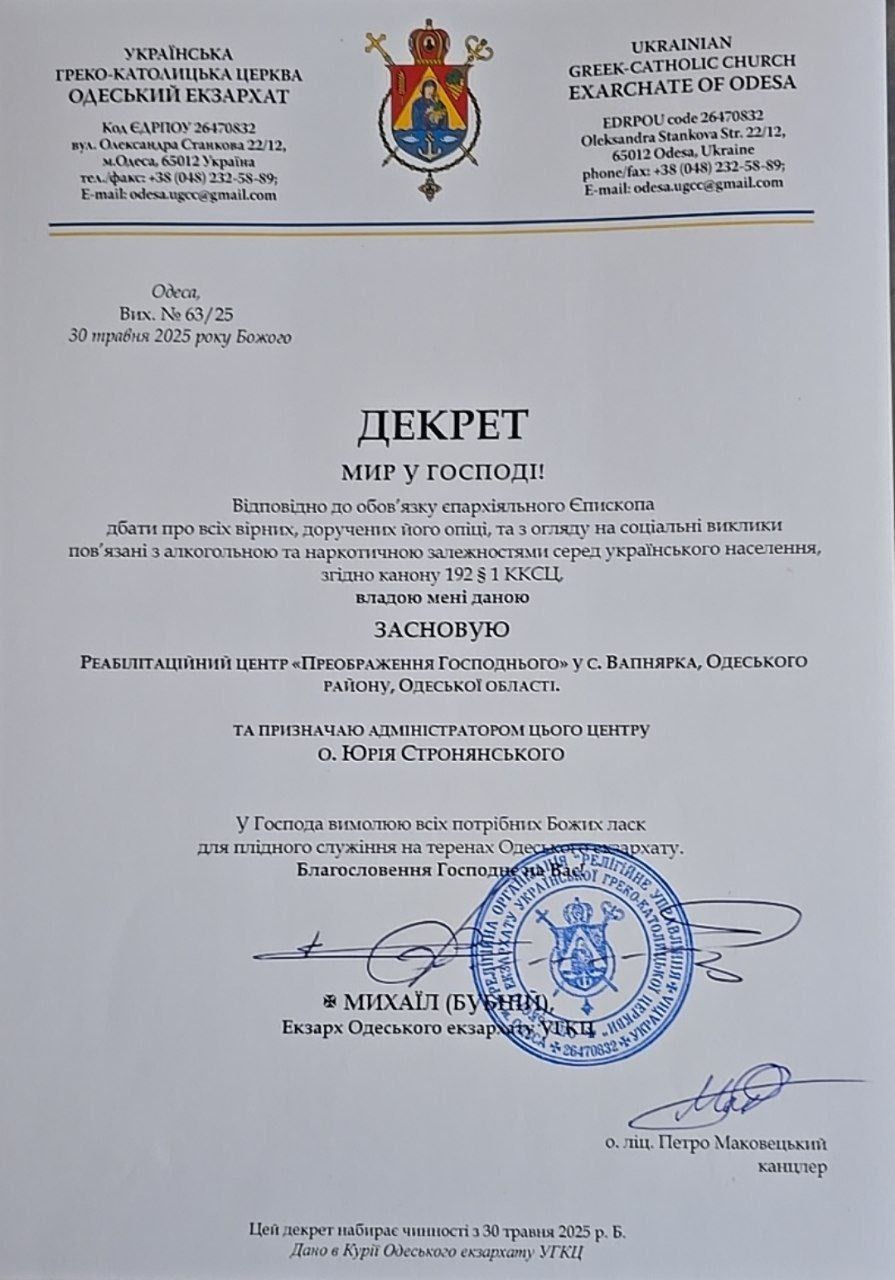
Founding Decree
Official establishment of the Transfiguration of the Lord Rehabilitation Centre.
Founding decree · 30 May 2025 · No. 63/25
By decree of the Ukrainian Greek Catholic Exarchate of Odesa dated 30 May 2025, the Transfiguration of the Lord Rehabilitation Centre was established in Vapniarka, Odesa Oblast. Fr. Yurii Stronyanskyi was appointed Administrator of the Centre.
The decree marked an important step in developing a ministry of support for people facing difficult life circumstances, including those affected by alcohol and drug dependence.
This ecclesiastical founding decree concerns the establishment of the centre. It is separate from state accreditation or the Foundation’s registration.
Programmes & Services
Recovery Programmes
Group sessions based on the Foundation and 12 Steps programmes encourage participants to reflect on their experiences, develop personal responsibility and discover new ways of relating to others. Honest conversation, respect for each person's story and the support of the community are central to this work.
Check AvailabilityContact our team to discuss your needs and confirm current programmes, specialist consultations and admission arrangements.
Please contact the team for the full programme catalogue and current availability.
Outreach and voluntary spiritual support
The team meets people in difficult circumstances in Odesa, listens to their needs and opens a conversation about support and rehabilitation.
Listen · Meet · Support. Spiritual conversations, prayer and reflection are voluntary, with respect for each person’s beliefs and freedom of conscience.
The centre does not replace hospitals, emergency medical care, medical detoxification or inpatient psychiatric treatment. Healthcare is delivered only by appropriately licensed professionals and institutions. The NAU team can discuss referrals and practical accompaniment where available.
The Transfiguration of the Lord Rehabilitation Centre continues to develop through shared work, determination and the support of people who care.
Renovating rooms, installing windows and doors, improving the grounds, preparing building materials and carrying out essential repairs are practical steps towards creating dignified living conditions for those seeking help.
Behind every stage are people's efforts, time and a shared commitment to making the centre safer, more welcoming and better suited to everyday life.
Visible progress
How Our Centre Has Changed
From Everyday Work to Visible Progress
Step by step, spaces once under renovation are becoming places where people can live, rest, connect with others and work towards personal recovery.
Improved rooms, an equipped kitchen and spaces for gathering and recreation reflect sustained effort and care.
The centre's development continues, while the improvements already made demonstrate what shared commitment can achieve.
The work behind the progress
Every renewed room is more than a renovation project. It is a space where people can feel order, calm, and hope for a new beginning. Step by step, the centre is being prepared to become warm, bright, and dignified for everyday life.
Visible transformation begins with simple daily work. Preparing rooms, repairing spaces, improving the interior, and caring for order all help create a place where recovery becomes real. This is how an environment of support and dignity takes shape.
A Place of Recovery
Calm, nature, and space for a new beginning
The centre is located in a beautiful setting near the liman, surrounded by a garden, greenery, and fresh air. Here, open space, quiet, and natural beauty come together. The sea, the plant life, and the peaceful atmosphere help create an environment where it is easier to pause, reflect, and begin the journey of restoration.
The gardenTime by the sea
The people around the work
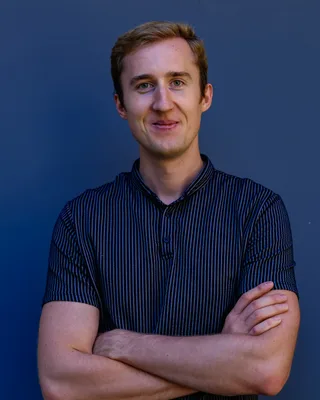
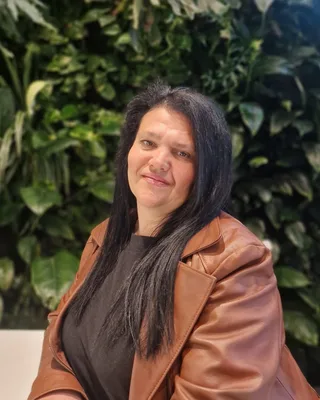
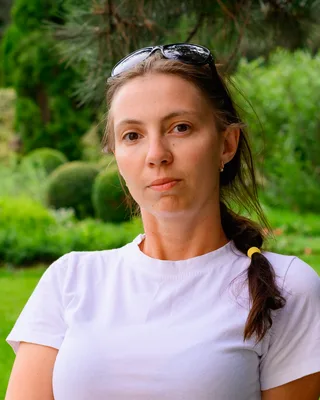
Our Team
Meet the people who lead the Foundation and support the rehabilitation centre.
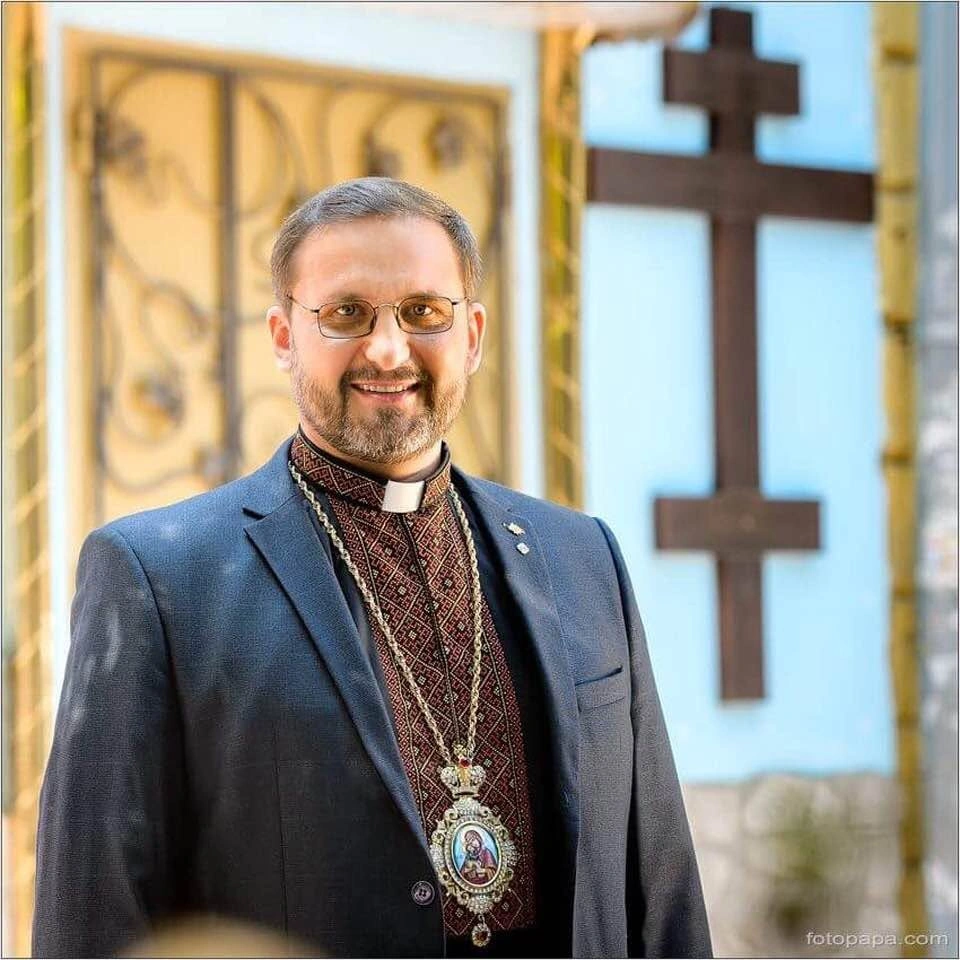
Bishop Mykhail Bubnii
Founder of Nobility and Unity
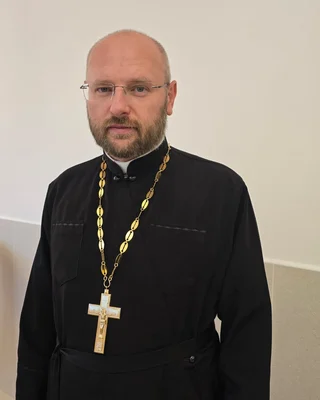
Fr. Yurii Stronyanskyi
Director of Nobility and Unity Foundation
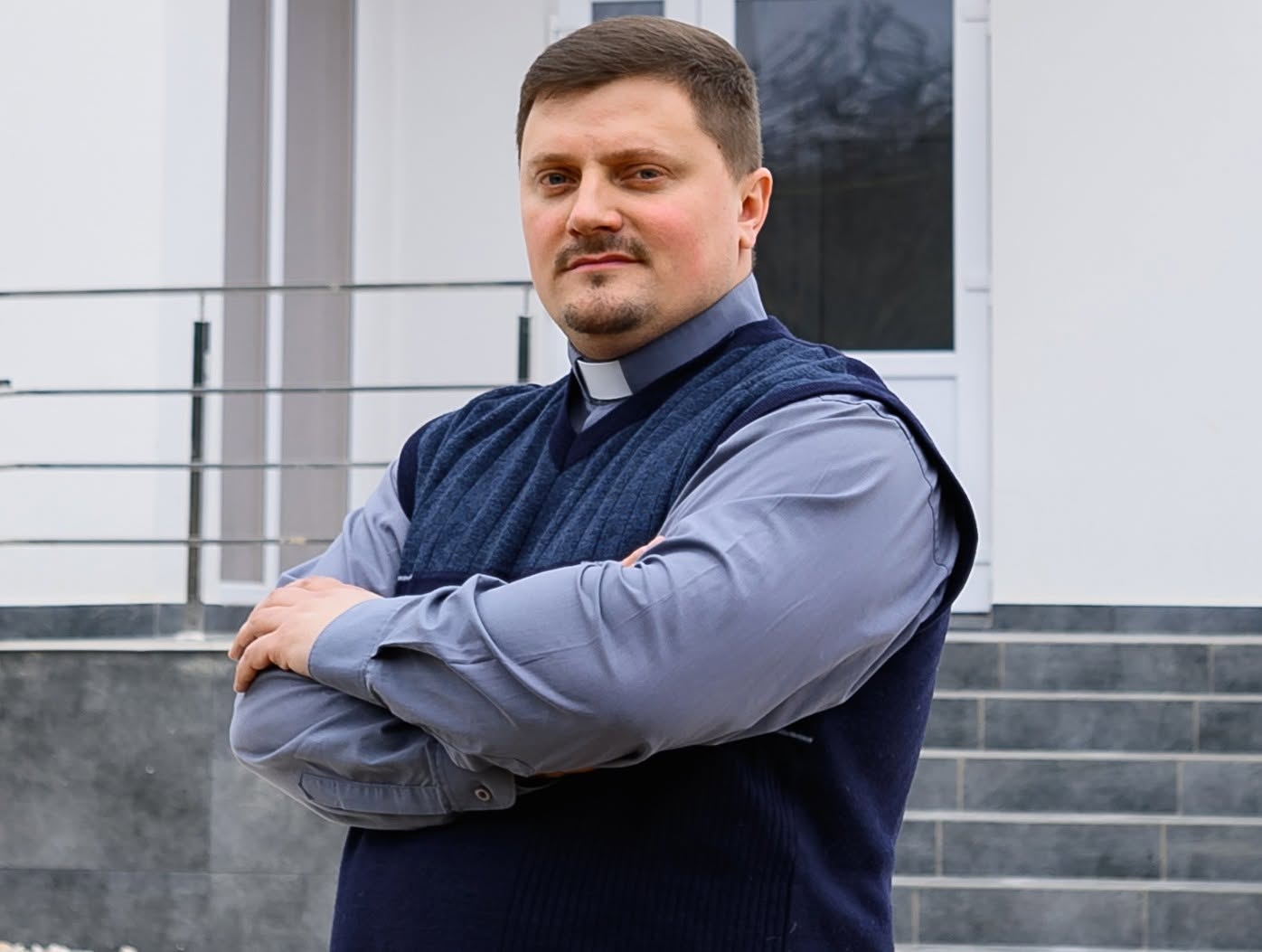
Fr. Ihor Plevskyi
Rehabilitation Programme Manager
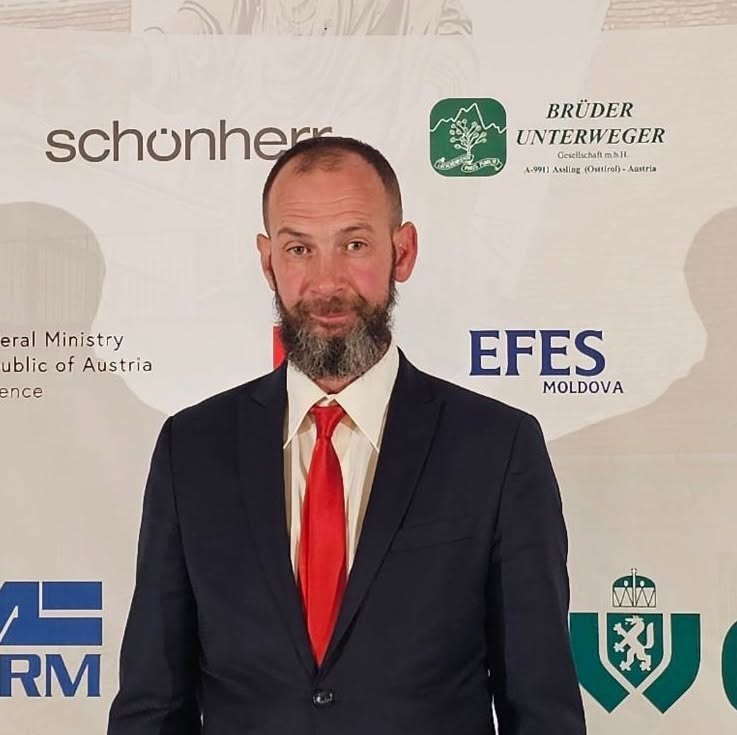
Ruslan Magar
Centre Administrator
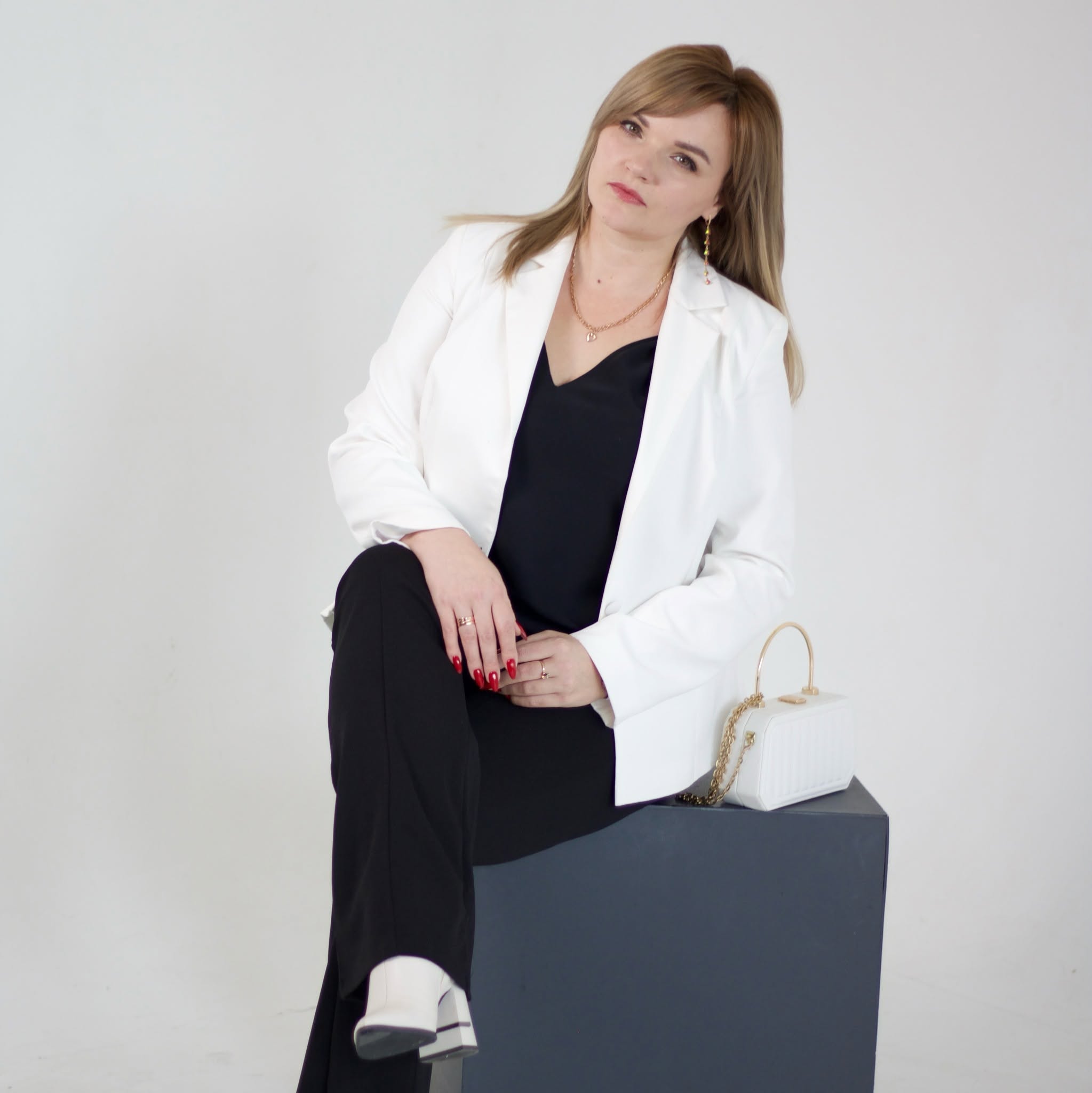
Oksana Harbolynska
Projects Coordinator
Oleh Maniv
Administrative Affairs Adviser
Viktoriia Frunza
Social Assistant
Anastasiia Plevska
Psychologist
Our photo chronicle
Life at Our Centre
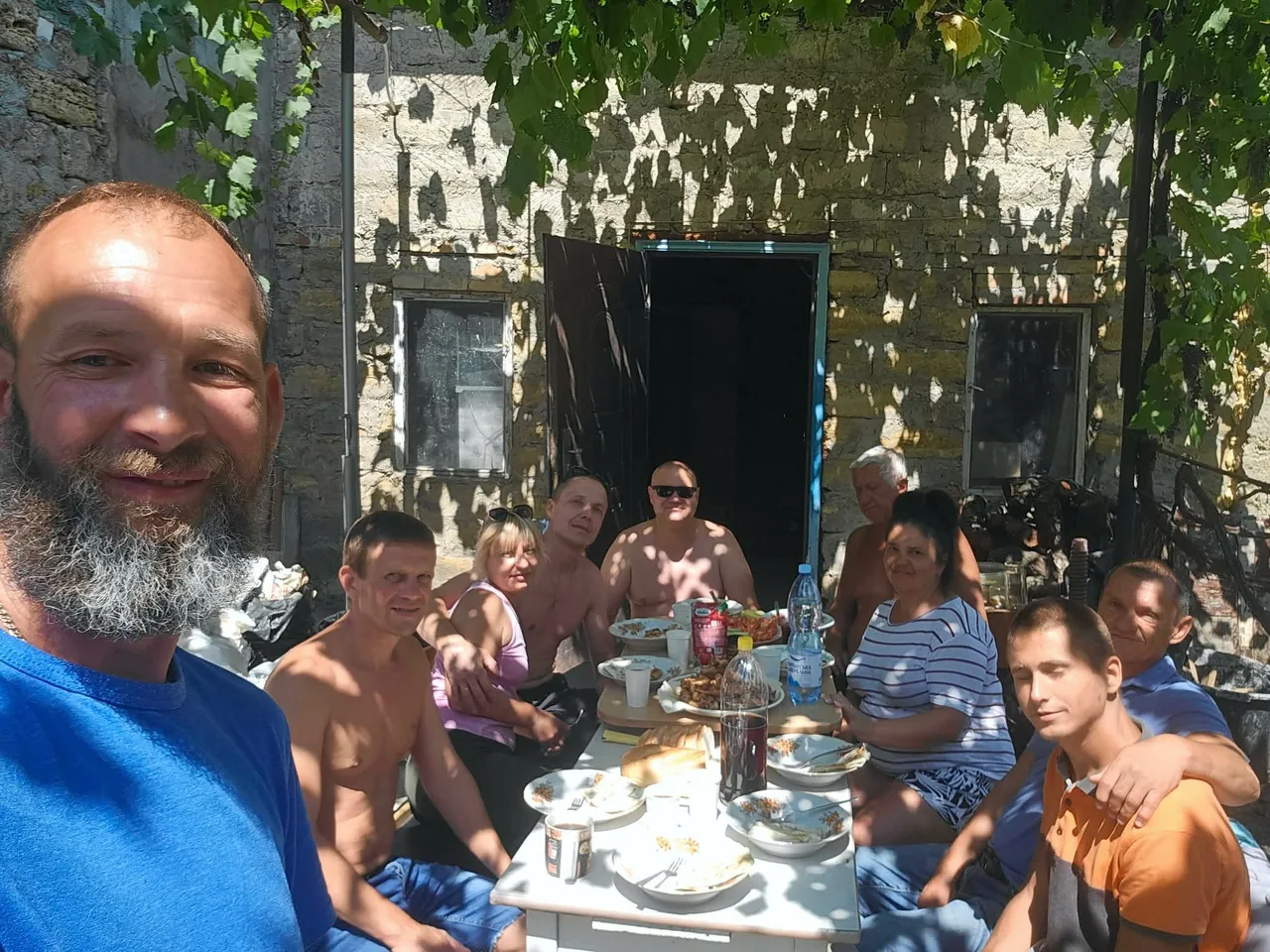
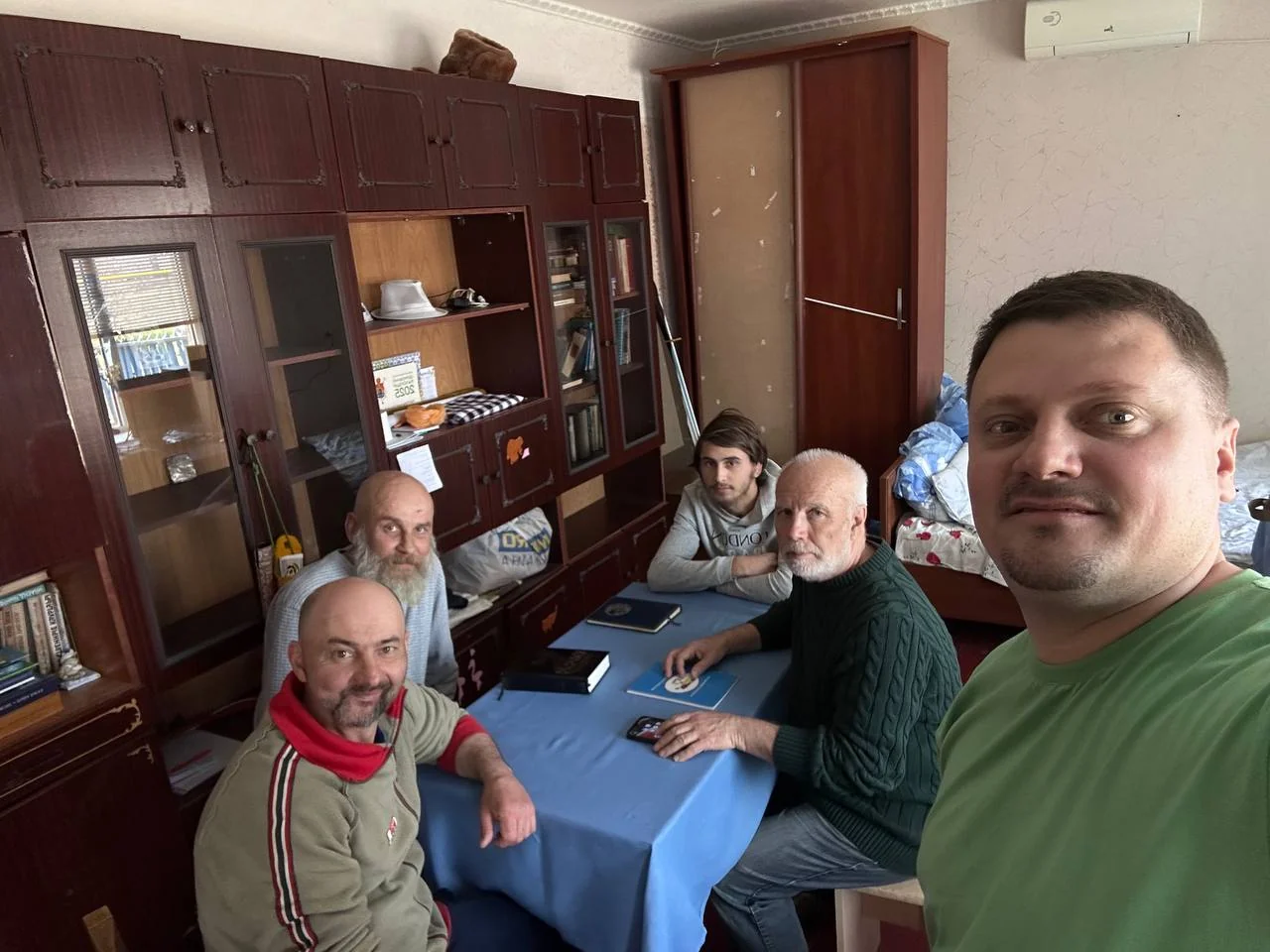
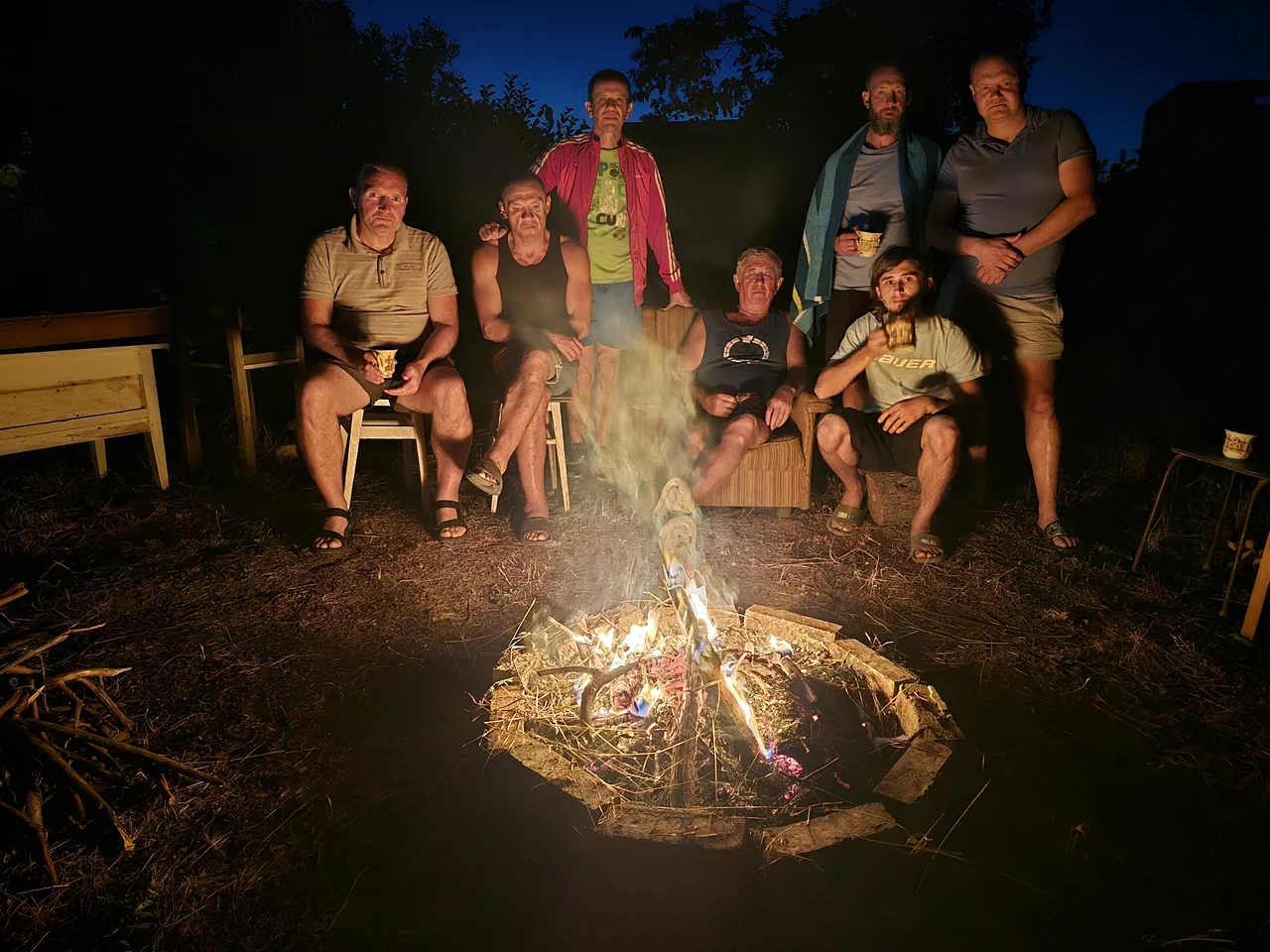
Everyday life at our centre is built around simple things: shared meals, cooking, practical work, rest and sincere conversations. Evenings by the fire, shared responsibilities and mutual encouragement help create a sense of belonging and remind people that they do not have to face their difficulties alone.
People and shared purpose
Our Partners & Supporters
Together, We Can Make a Greater Difference
The development of the Transfiguration of the Lord Rehabilitation Centre is strengthened by people who share our values, take an interest in our work and support our commitment to helping those facing difficult life circumstances.
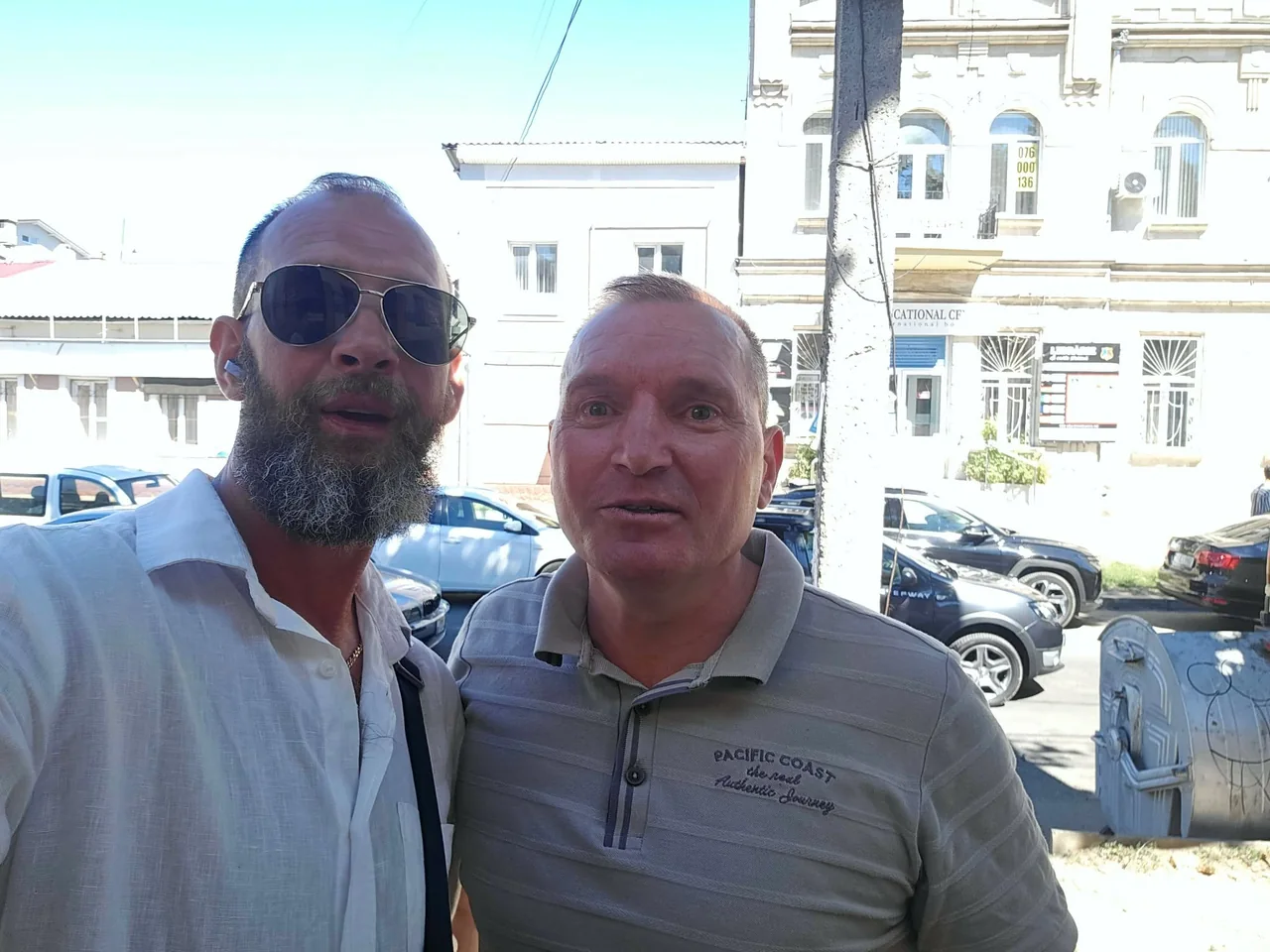
We deeply value meaningful encounters, open dialogue and cooperation with benefactors, Church organisations and people of goodwill.
Every meeting creates opportunities for sharing experience, building mutual understanding and exploring new initiatives to support people in need.
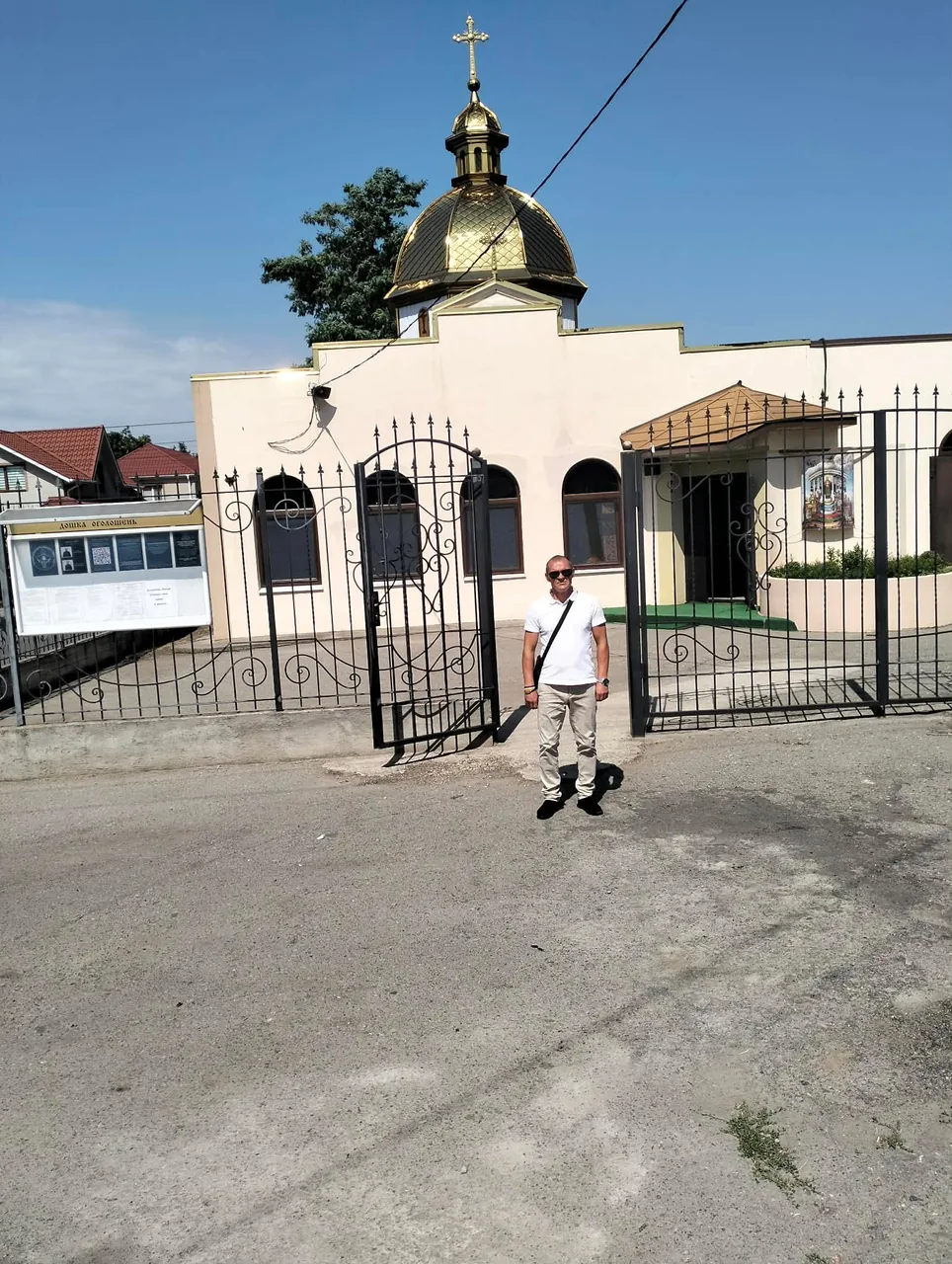
Illustrative image
Support the centre
Help the work continue.
Support helps meet practical needs: food, utilities and heating, transport, repairs and equipment. It also helps the team continue outreach and invite people to rehabilitation.
Contact the Foundation to discuss current needs and ways to support.
Before your first conversation
Frequently Asked Questions
Helpful answers to common questions before contacting our centre.
What types of addiction can we ask about?+
We welcome enquiries from people seeking support related to alcohol, drugs, tobacco, gambling and other forms of addictive behaviour. Suitability for a particular programme is discussed individually.
Can we simply talk first?+
Yes. The first contact can be a conversation about your situation, your concerns and possible next steps.
How do we get started?+
Contact the centre's team to discuss your circumstances, current support options and admission arrangements.
Can parents or family members contact the centre?+
Yes. Family members may contact the centre to discuss their concerns, seek information and explore possible ways to support a loved one.
How long does the programme last?+
Programme duration and participation arrangements should be confirmed directly with the centre's team, taking into account current conditions and individual circumstances.
Is accommodation available?+
Please contact the centre in advance to confirm current accommodation, meals and admission arrangements.
Is there a fee?+
Please contact the centre to clarify current participation arrangements, any available charitable support and financial conditions.
Is psychological support available?+
Psychological support is among the centre's areas of work. Please confirm the current availability of specialist consultations when contacting the team.
Does the centre provide medical treatment?+
Rehabilitation support is not a substitute for specialised medical treatment. Medical needs and access to appropriate healthcare providers should be discussed separately.
Is participation in prayer compulsory?+
The centre is rooted in Christian values. Spiritual support is offered with respect for each person's freedom of conscience and personal beliefs.
Can someone come from another city?+
Please contact the team before travelling to confirm admission possibilities and practical arrangements.
Can family members visit?+
Visits should be arranged in advance with the centre's administration, taking into account community arrangements and individual circumstances.